Here Are The Biggest Roblox Announcements From RDC 2026
Here was Roblox's biggest announcements of RDC 2026. From standalone Roblox games and offline play to AI creation, playtesting, Roblox Wallet and new ways for developers to earn, here's what actually matters.
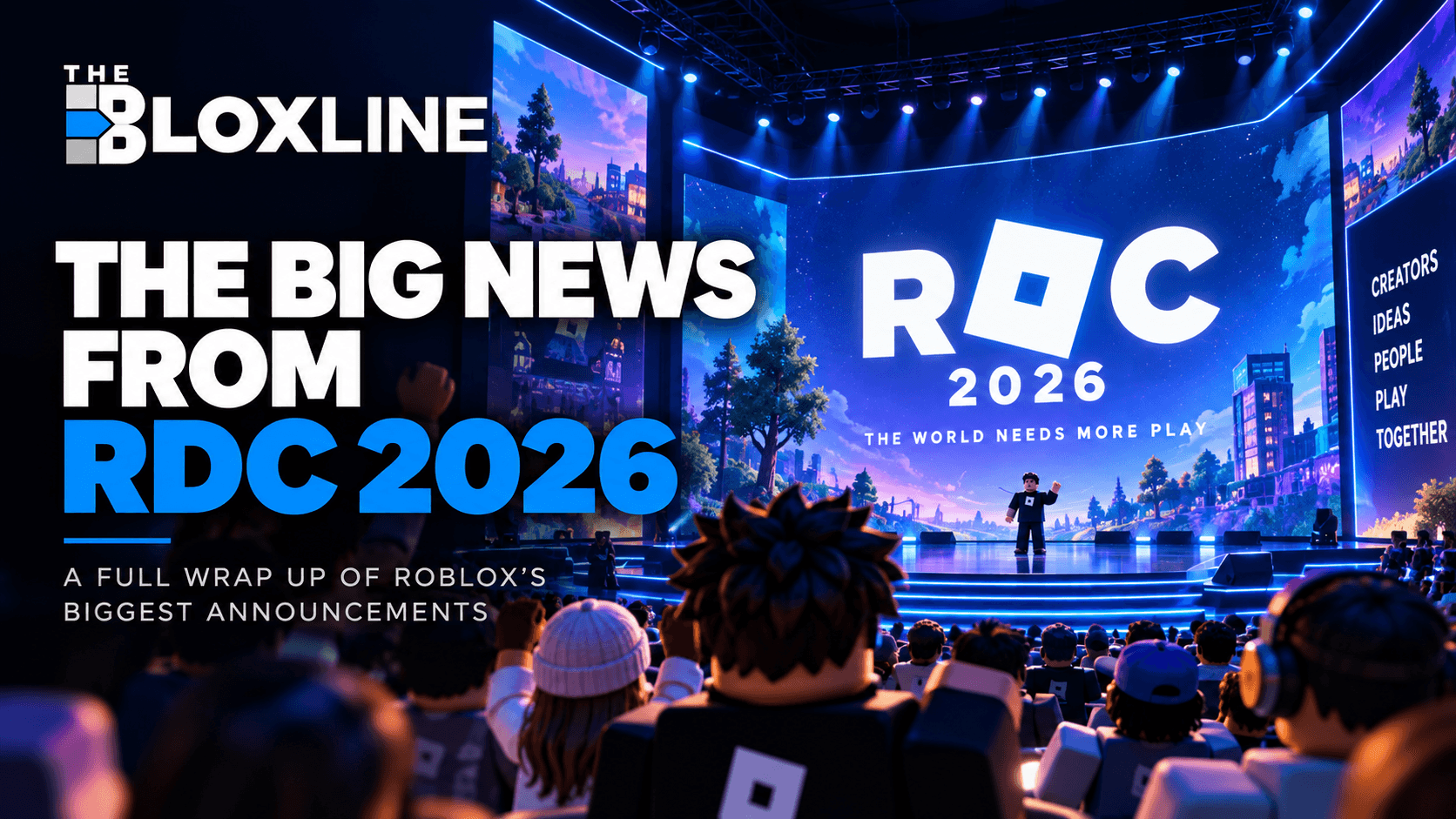
So spoliler - I wasn't at the Roblox Developers Conference this year.
I wasn't sitting in the audience in San Jose, speaking to developers between sessions or getting hands on demonstrations of everything Roblox announced, so I'm not going to pretend that I was.
But I was watching closely.
Since starting The Bloxline, I've spent more and more of my time playing Roblox games, speaking directly with developers and studios, learning about the businesses being built around the platform and trying to understand where Roblox itself is heading, which meant RDC was always going to be an important event for me to follow.
And there was a LOT to take in.
Roblox announced changes to how games can be distributed, where they can be played, how developers can build them, how they can test them and even how creators can eventually receive and spend the money they earn.
Some of these announcements are relatively small improvements that will make life easier for developers, while others could fundamentally change what we mean when we talk about a "Roblox game".
So, on behalf of The Bloxline, I've gone through the announcements and pulled together what I believe are the biggest pieces of news from RDC 2026, while trying to explain what they actually mean in the simplest terms possible.
Here's the full wrap up.
Roblox wants its games to exist outside Roblox
This is probably the announcement that stood out to me the most.
Roblox announced Roblox Everywhere, an initiative that will eventually allow developers to distribute games built using Roblox as standalone applications and through the web.
In simple terms, a Roblox game will no longer necessarily need to feel like something you can only access by opening Roblox, finding the experience and pressing play.
Roblox says creators will be able to distribute games as standalone apps, while Roblox continues providing the underlying technology and services that make those games work. Reuters reported that the company's plans cover mobile, PC and consoles.
That is a very interesting change because think about some of the biggest Roblox games today.
We know them as Roblox experiences because Roblox is the destination. You open Roblox first and then choose the game you want to play.
But imagine a future where a sufficiently successful developer can say:
"Download our game."
The person playing it may not need to think very much about Roblox at all, even though Roblox technology is powering everything underneath.
For studios trying to establish their games as brands in their own right, that could be significant.
It also makes Roblox look slightly less like just a platform containing games and slightly more like technology that can power games wherever developers want their audiences to find them.
You'll be able to click a Roblox game link and start playing
There's another part of Roblox Everywhere that I think could be particularly important for game discovery.
Roblox says that in late 2026, developers will be able to share their game's Details Page link somewhere such as YouTube, X or Discord and somebody using Chrome will be able to click it and start playing without needing to install the Roblox application first.
That sounds like a small change until you think about how people actually discover games.
Maybe you watch somebody playing an interesting Roblox game on YouTube.
Maybe somebody posts a clip on social media.
Maybe a developer shares their game in a Discord community.
Maybe you read about a new experience on The Bloxline.
At the moment, there can still be several steps between seeing something that interests you and actually getting into the game.
Roblox wants to shorten that journey.
See the game. Click the link. Start playing.
If that works smoothly, it could make the wider internet much more important to Roblox discovery because developers would have more reason to attract audiences from outside Roblox rather than relying almost entirely on Roblox itself to surface their games.
For publications, creators and communities covering Roblox games, I think that is worth paying attention to as well. I definitely will be!
Some Roblox games will work offline
Another announcement that caught my attention was offline solo play.
Roblox says developers will eventually be able to create experiences that combine online and offline gameplay, with offline solo play planned for next year.
Again, think about how unusual that sounds compared with the Roblox most of us know today.
Roblox has historically been something you connect to.
You go online, join an experience and enter a world populated by other people.
That isn't disappearing, but developers could eventually create a game containing an online multiplayer experience alongside something like a single-player campaign that continues working without an internet connection.
That opens Roblox up to different types of games.
It could also make Roblox games more practical in situations where somebody doesn't have a reliable connection, such as travelling.
What I find interesting about this announcement isn't simply the offline feature itself. It's what it represents.
Roblox appears to be removing some of the old assumptions about what developers are supposed to build on the platform.
Roblox is making it easier to build 2D games
That same thinking can be seen in the company's new support for 2D games.
When most people picture Roblox, they probably imagine a three-dimensional world filled with Roblox avatars.
But not every successful game needs to look like that.
Roblox says new 2D capabilities arriving in late 2026 will include an orthographic camera, animated image containers, direct sprite-sheet importing and interface improvements such as blur, text shadows and better gradients.
Those are technical terms, but the important part for ordinary players is much simpler:
Developers are getting better tools for creating games that don't need to look like traditional 3D Roblox experiences.
That potentially makes genres and visual styles that are common elsewhere in gaming easier to build properly inside Roblox.
And once again, the theme is the same.
Roblox doesn't appear to want developers thinking:
"How do I turn my idea into a Roblox style game?"
It increasingly wants them thinking:
"What game do I want to make?"
AI is becoming part of how Roblox games are built
There was inevitably a lot of AI at RDC.
Roblox had already introduced Build earlier this year, which allows somebody to describe a game using normal language and have AI create a playable starting point.
For example, rather than manually building every element from scratch, somebody can describe the type of game they want and use that generated result as somewhere to begin.
At RDC, Roblox said approximately 9,000 games had already been published using Build, and perhaps the more interesting statistic was that 71% of people who created a game using it had not previously used Roblox Studio.
That second number tells you why Roblox is so interested in this.
There are probably enormous numbers of people who have thought:
"I'd love to make a Roblox game."
Then they open Roblox Studio, realise they need to understand considerably more than they expected and stop.
AI potentially lowers that first barrier.
It doesn't mean somebody can type one sentence and automatically produce the next massive Roblox hit.
Building something that people genuinely want to play repeatedly is still a completely different challenge.
But AI could make it much easier to turn an idea into something playable.
Roblox has also announced Scene Generation, planned for late 2026, which will help creators generate a scene layout rather than building everything manually.
The wider direction is fairly obvious.
Roblox wants more people to be capable of making games.
AI could also help developers test their games
AI isn't only being used to create things.
Roblox is also exploring how AI agents can help playtest games.
This is particularly interesting because testing a multiplayer Roblox game can become difficult very quickly.
Imagine you've built something designed for a large number of players and you want to understand what happens when all of those people are running around, interacting with systems and doing things you may not have expected.
Getting a huge group of real people together every time you change something isn't always practical.
AI controlled players could potentially help developers test some of those situations much more frequently.
Reuters reported that Roblox plans to add non-player characters capable of playtesting games as part of its wider expansion of AI tools.
I don't see this as meaning that real human playtesting suddenly becomes unnecessary.
An AI agent can potentially tell you that something happened.
Analytics can tell you where players stopped.
Automated testing can help identify whether systems behave as expected.
But there's still something very different about putting a game in front of somebody who has never seen it before and watching them ask:
"Where am I supposed to go?"
Or:
"I don't understand what this button does."
Or simply:
"I'm bored."
Different forms of testing answer different questions, and I think developers will increasingly use a combination of automated testing, analytics and actual human feedback.
Developers are also getting easier early human testing
Roblox isn't relying entirely on AI either.
One of the less dramatic but genuinely useful announcements from RDC was Early Testing.
From late 2026, Roblox says developers will be able to invite up to 10 age checked friends of similar ages into a game to test it before it has been publicly published.
That may not generate the same headlines as standalone Roblox apps, but it solves a very real problem.
When you have spent months making something, you know too much about it.
You know where to go.
You know what every icon means.
You know how progression works.
You know why something exists.
Then somebody who has never seen your game arrives and does something completely different from what you expected.
That's why early testing matters.
The developer sees the game they intended to build.
The new player experiences the game that actually exists.
Sometimes those are two very different things.
Roblox Wallet could change how creators get paid
RDC also contained some important announcements for people treating Roblox development as an actual business.
The biggest was Roblox Wallet.
Currently, eligible creators can convert their earned Robux into real money through Roblox's Developer Exchange system, better known as DevEx.
Wallet is designed to make that relationship with earnings feel much more like managing business finances.
Starting in December 2026, eligible US based independent creators aged 18 and over will begin getting access to Wallet, with cleared earnings automatically paid into it in US dollars every business day.
Creators will then be able to decide when to transfer their available money to their bank account, while Creator Hub will provide much more detailed information about transactions and cash flow.
Roblox says Wallet will initially maintain the same DevEx rates, and creators will also be able to use their Wallet balance to purchase Robux at the DevEx rate rather than effectively cashing out and then buying Robux again at the normal retail price.
That might sound like financial plumbing, but it matters when people are running genuine businesses.
Roblox says it has paid creators more than $5 billion through DevEx since 2013, including more than $1.7 billion in the latest reported year.
Once people are paying staff, buying advertising, commissioning work and managing business expenses, getting paid isn't a small feature anymore.
It's infrastructure.
And Roblox is creating an actual card
Then there's the Roblox Card.
Roblox says this will arrive in selected markets during 2027 and allow eligible creators to spend their Wallet balance anywhere the card is accepted. International Wallet expansion, support for groups and incorporated businesses, and wider creator eligibility are also planned.
This was one of those announcements where I had to stop for a moment and think about what Roblox has become.
We've gone from children buying Robux to customise their avatars to Roblox discussing financial accounts, daily payouts, cash flow management and payment cards for people operating businesses on its platform.
Developers are getting another way to make money through advertising
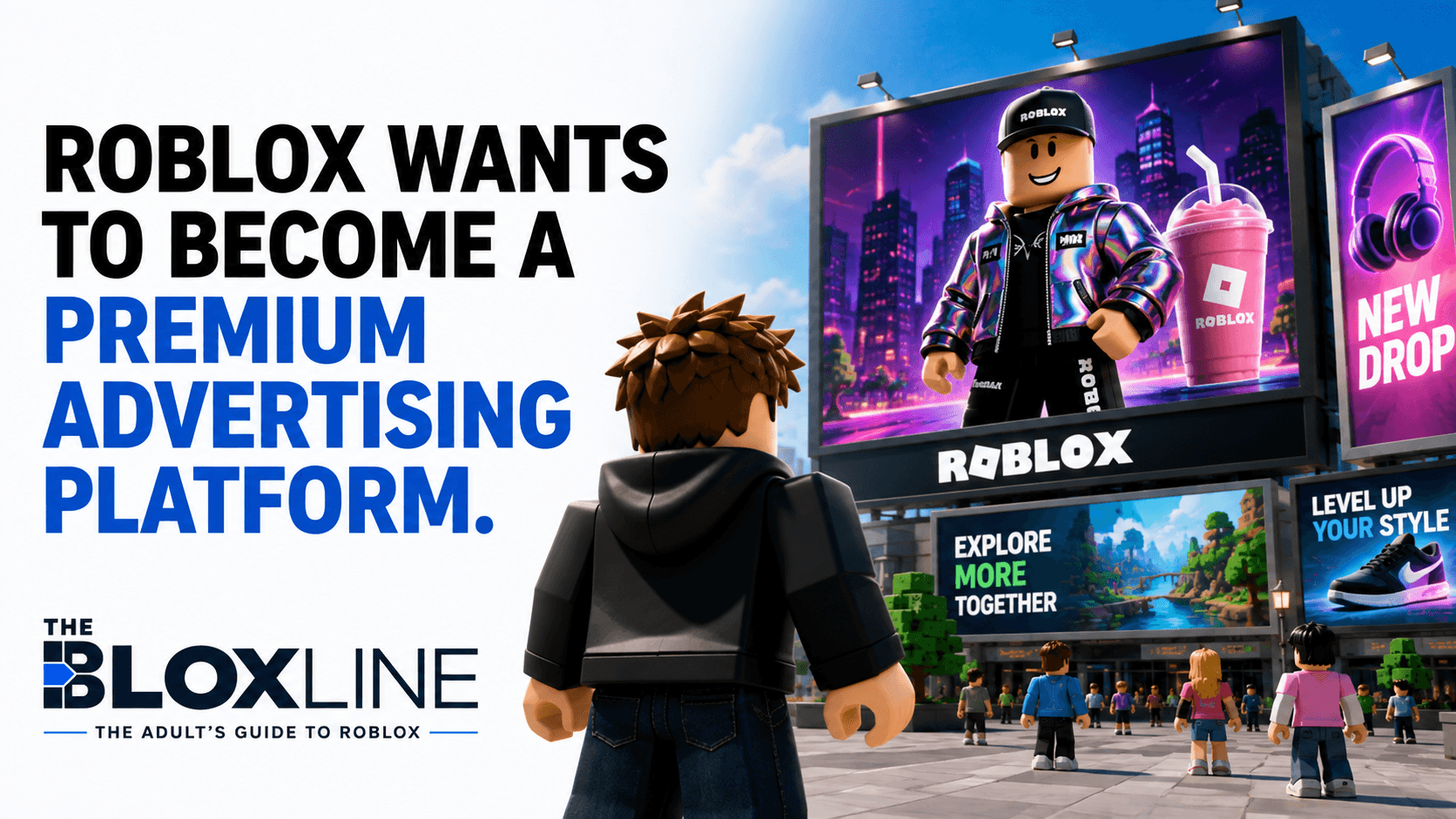
Roblox also announced pre roll video advertising.
These will be short, skippable videos that can appear while a game loads, with Roblox handling the technical side and sharing advertising revenue with the developer.
Roblox says creators won't need to add any code or manually integrate the system, while Roblox Plus subscribers won't see these pre roll advertisements.
For developers, that creates another potential income stream.
Instead of monetisation relying entirely on convincing players to purchase items, passes or other things within an experience, a developer could potentially earn something from players simply arriving and seeing advertising.
Whether players like it is another question entirely.
That's why I'll be interested in seeing how aggressively it is used and whether developers feel the additional revenue is worth potentially putting another interruption between somebody pressing Play and actually entering the game.
Roblox is giving developers better tools for when things go wrong
One of the announcements ordinary players probably won't notice directly is the new Observability Platform.
That name makes it sound much more complicated than it needs to.
Essentially, Roblox wants developers to have better tools for understanding what went wrong when something breaks.
From late 2026, developers are expected to be able to trace player sessions and logs, receive troubleshooting information and work on fixes through Studio and Creator Hub.
Roblox is also introducing Player Support, which will allow developers to view and manage support requests submitted by their players.
These features aren't particularly glamorous, but they're another sign of Roblox growing up as a development platform.
If you're running a game with a significant audience and something breaks, knowing that people are complaining isn't enough.
You need to understand what happened, who was affected and how you can fix it.
That's the kind of infrastructure professional game studios expect.
Communication inside games is becoming more flexible
Roblox also announced Pre Set Quick Words, which will allow developers to create game specific phrases that Roblox can review in advance for policy compliance.
The easiest way to understand this is to imagine different genres.
A football game might need phrases such as "Pass", "Shoot" or "Defend".
A racing game needs completely different communication.
A cooperative obstacle game might need players to tell each other when to move or wait.
Rather than relying entirely on unrestricted chat, developers can potentially provide useful communication designed specifically around what players are doing in that game.
Roblox says the feature is planned for late 2026.
There is also Developer Push Notification Support, which will allow opted-in players to receive notifications such as being told when it is their turn in an asynchronous game.
That might sound minor, but it makes completely different kinds of games more practical on Roblox, particularly games where two people don't necessarily need to be online simultaneously.
There were a lot of improvements to Roblox Studio and the engine
RDC also contained a huge number of more technical announcements that developers will probably appreciate considerably more than the average player.
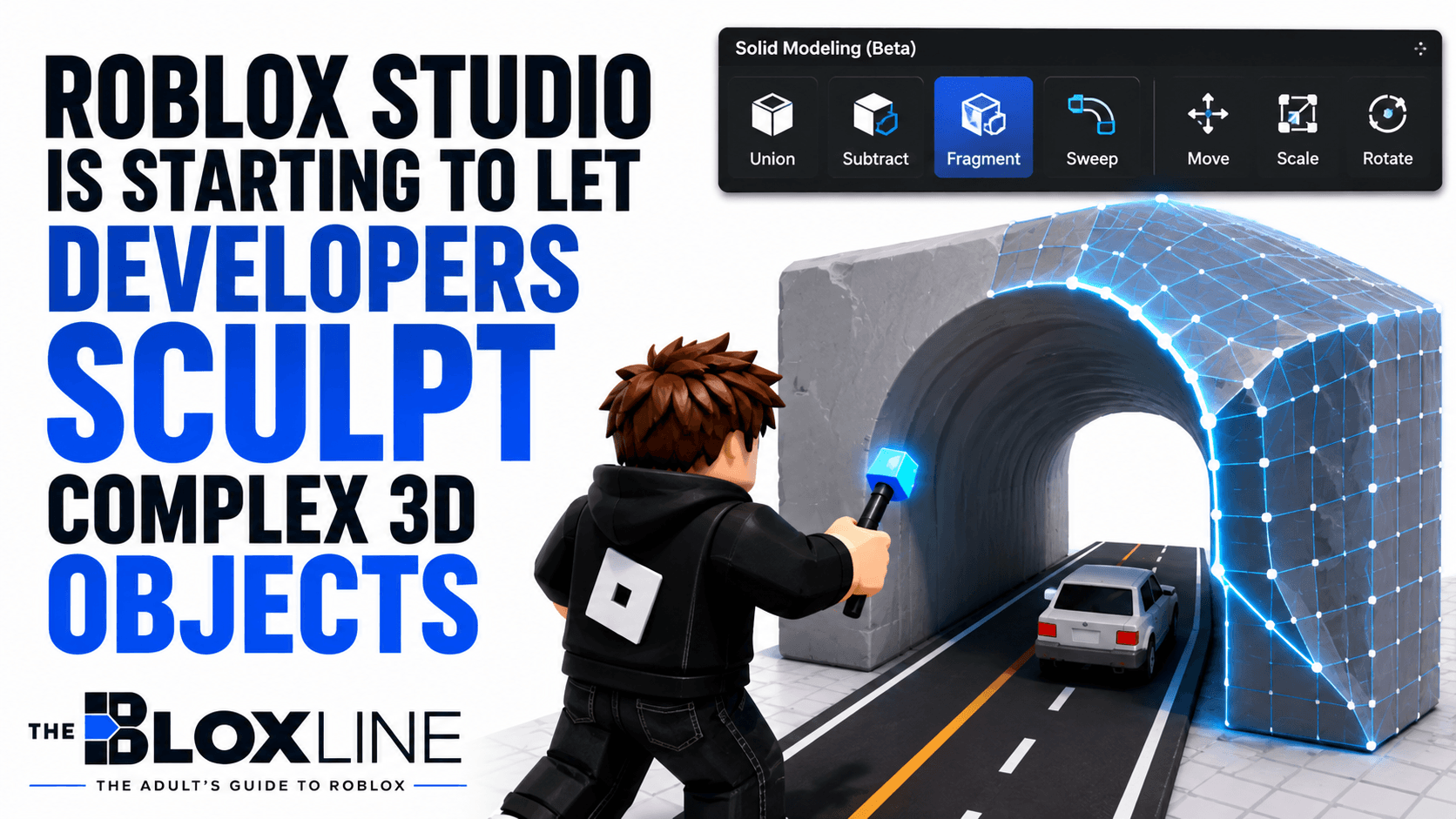
Among them were improvements to terrain creation, better collision geometry, new basic shapes developers can use when constructing worlds, improvements to materials and lighting, new collaboration tools and Branch and Merge, which is intended to make it easier for multiple people to work on different versions of the same project before bringing their work back together.
Roblox is also planning improvements to how far players can see within experiences, including increasing the minimum draw distance on lower-end devices, and further work on materials that should allow developers to create richer and more detailed looking environments.
I won't pretend every technical change means much to somebody who simply wants to play Roblox.
What matters is the cumulative effect.
Developers are gradually getting more sophisticated tools.
And more sophisticated tools should eventually mean more sophisticated games.
One statistic from RDC really stood out to me
There was another piece of information that wasn't a flashy product announcement but might be one of the most encouraging things developers heard at RDC.
Roblox said that in August, 28% of the games in its top 100 by hours played had launched during the previous 90 days.
Across the top 1,000, that figure was 33%.
Think about that for a moment.
Roblox has enormous established games with millions of players, huge communities and development teams that have spent years learning exactly how the platform works.
It would therefore be reasonable for a new developer to look at the charts and think:
"How am I ever supposed to compete with that?"
Yet a significant proportion of the most played games were relatively new.
That doesn't mean launching a Roblox game is easy.
It absolutely doesn't mean that every good game will be discovered.
But it does suggest that the door isn't completely closed.
New games are still breaking through.
For me, that's one of the most interesting things about Roblox right now.
Roblox is enormous, but it still wants to become something much bigger
Roblox said that an average of 123 million people came to the platform every day during the latest reported quarter, while game visits were up 55% compared with the previous year.
Those numbers are already enormous.
Yet RDC 2026 didn't feel like the conference of a company satisfied with simply getting more people to use the existing version of Roblox.
It felt like Roblox was trying to redefine what its platform can actually be.
A Roblox game doesn't necessarily have to live exclusively inside the Roblox application.
It doesn't necessarily have to require an internet connection.
It doesn't necessarily have to be a traditional 3D Roblox experience.
Its developer doesn't necessarily have to understand every part of Roblox Studio before they can start creating something.
Its audience doesn't necessarily have to discover it through the Roblox homepage.
And its creator doesn't necessarily have to think of themselves as somebody earning some Robux from a game rather than somebody running an actual business.
That's why, having watched the RDC news closely from outside the conference, Roblox Everywhere is probably the announcement I keep coming back to.
Because the biggest story from RDC wasn't any individual feature.
It was the direction all of these features point towards.
For much of its first 20 years, Roblox could fairly easily be described as a platform where people make games that other people play inside Roblox.
The next version looks considerably harder to define.
Roblox increasingly wants to provide the creation tools, game engine, hosting, distribution, discovery, monetisation, payments, analytics, testing and infrastructure that allow somebody to build an entire game business.
And eventually, the player might not even need to know that Roblox is powering the game they're playing.
For me, that is the big story coming out of RDC 2026.
I wasn't there.
But I'll certainly be watching what happens next.