Why Are Brands and Businesses Paying Attention to Roblox?
For years, many businesses saw Roblox as something that only mattered to children.
Today, that view is changing.
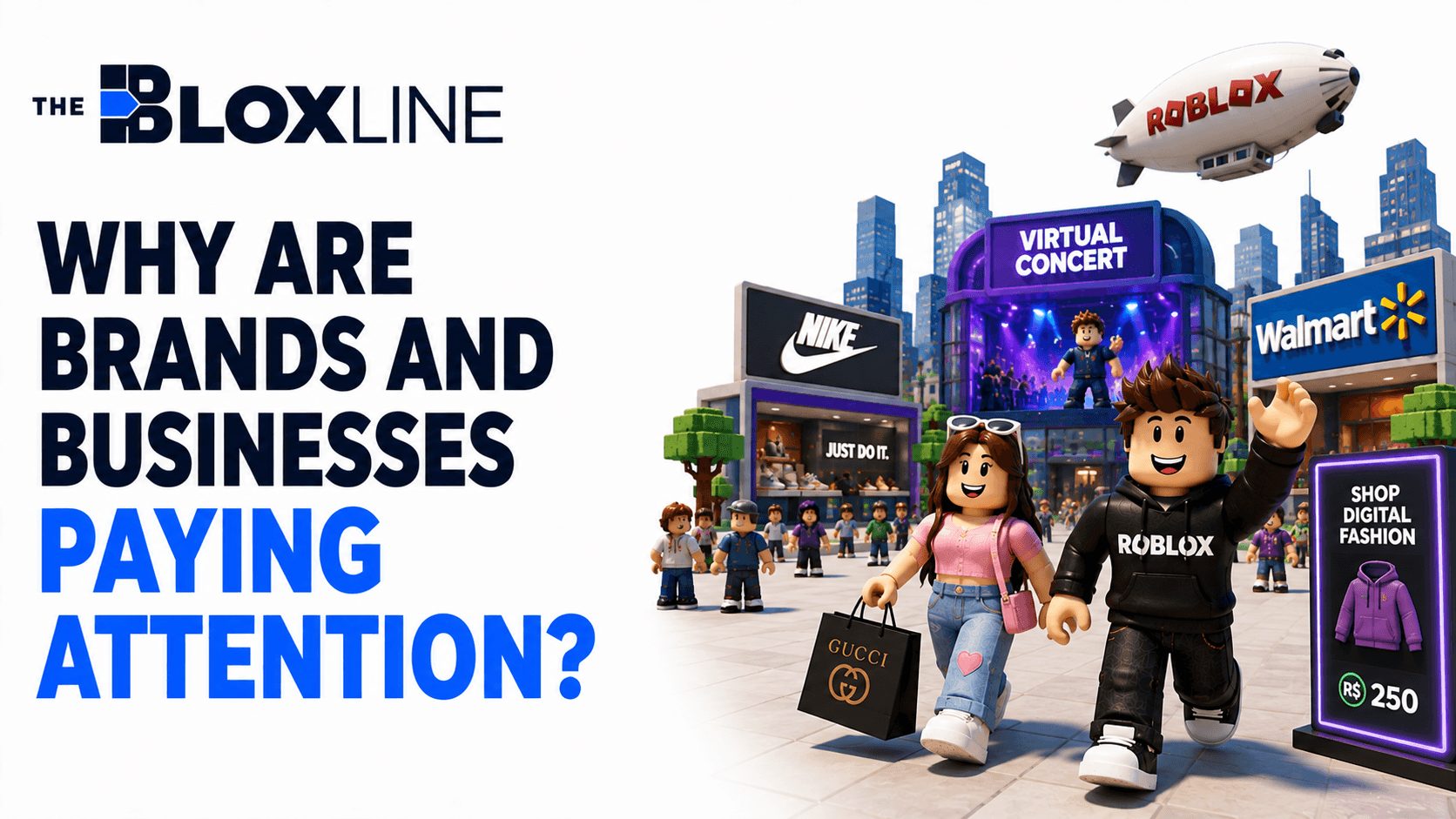
Global brands, fashion companies, sports teams, retailers, music artists and even car manufacturers have all experimented with Roblox in recent years. Some have built virtual worlds. Others have launched digital products or hosted live events for millions of players.
So what's changed?
The simple answer is that brands are following where people's attention is going.
For millions of younger consumers, Roblox isn't just another game. It's a place they spend time, socialise with friends and discover new experiences.
That makes it difficult for businesses to ignore.
It's where younger audiences already are
One of the biggest challenges for businesses today is reaching younger generations.
Traditional television attracts fewer young viewers than it once did.
Many people use ad blockers online.
Social media is becoming increasingly crowded.
Roblox offers something different.
Instead of interrupting someone with an advert, brands can become part of an experience that people have actively chosen to visit.
That creates opportunities that traditional advertising often can't.
Advertising feels more interactive
Imagine walking through a virtual city and discovering a branded basketball court where you can play with friends.
Or attending a virtual concert hosted by your favourite artist.
Or trying on digital clothing before buying matching items in the real world.
These experiences don't always feel like advertising in the traditional sense.
Instead, they're designed to entertain first.
When they're done well, players remember the experience rather than simply the advert.
Virtual shopping is becoming a real business
Many brands now sell digital clothing and accessories for Roblox avatars.
To someone unfamiliar with gaming, buying virtual trainers or a digital jacket might seem unusual.
For younger generations, it's becoming increasingly normal.
Just as people personalise their homes or their social media profiles, many players enjoy customising how their avatar looks.
That has created entirely new business opportunities for fashion brands and designers.
Roblox offers valuable insight
For many companies, Roblox isn't only about making sales today.
It's about understanding tomorrow's customers.
How do younger people spend their time?
What catches their attention?
Which experiences do they enjoy sharing with friends?
These are questions that businesses are trying to answer as consumer behaviour continues to evolve.
Roblox provides one place where many of those behaviours can be observed.
Not every brand succeeds
It's important to remember that simply appearing on Roblox doesn't guarantee success.
Players are quick to recognise experiences that feel like little more than advertisements.
The most successful brand activations usually have something in common.
They're genuinely enjoyable.
They give players a reason to visit beyond seeing a company logo.
When brands create experiences that feel fun, useful or rewarding, players are much more likely to engage with them.
Roblox isn't suitable for every business
It's also worth keeping expectations realistic.
Not every company needs a Roblox strategy.
Businesses selling products aimed primarily at older adults may find little value in building a virtual experience.
Others may discover that their customers simply aren't active on the platform.
Like any marketing decision, success depends on understanding the audience rather than following trends.
It's part of a much bigger shift
Roblox represents something larger than gaming.
Consumers increasingly expect digital experiences rather than one way advertising.
They want interaction.
Participation.
Entertainment.
Community.
Platforms like Roblox reflect that shift.
Brands that understand it are experimenting with new ways to connect with audiences instead of relying entirely on traditional campaigns.
Why this matters
The question isn't whether every business should be on Roblox.
The better question is whether the people a business wants to reach are spending time there.
For some organisations, the answer will be yes.
For others, it won't.
What's clear is that Roblox has become much more than a platform for games.
It's becoming part of the wider digital economy, where entertainment, creativity, shopping and marketing increasingly overlap.
Businesses don't need to chase every trend.
But understanding why Roblox matters helps explain where digital engagement is heading next.